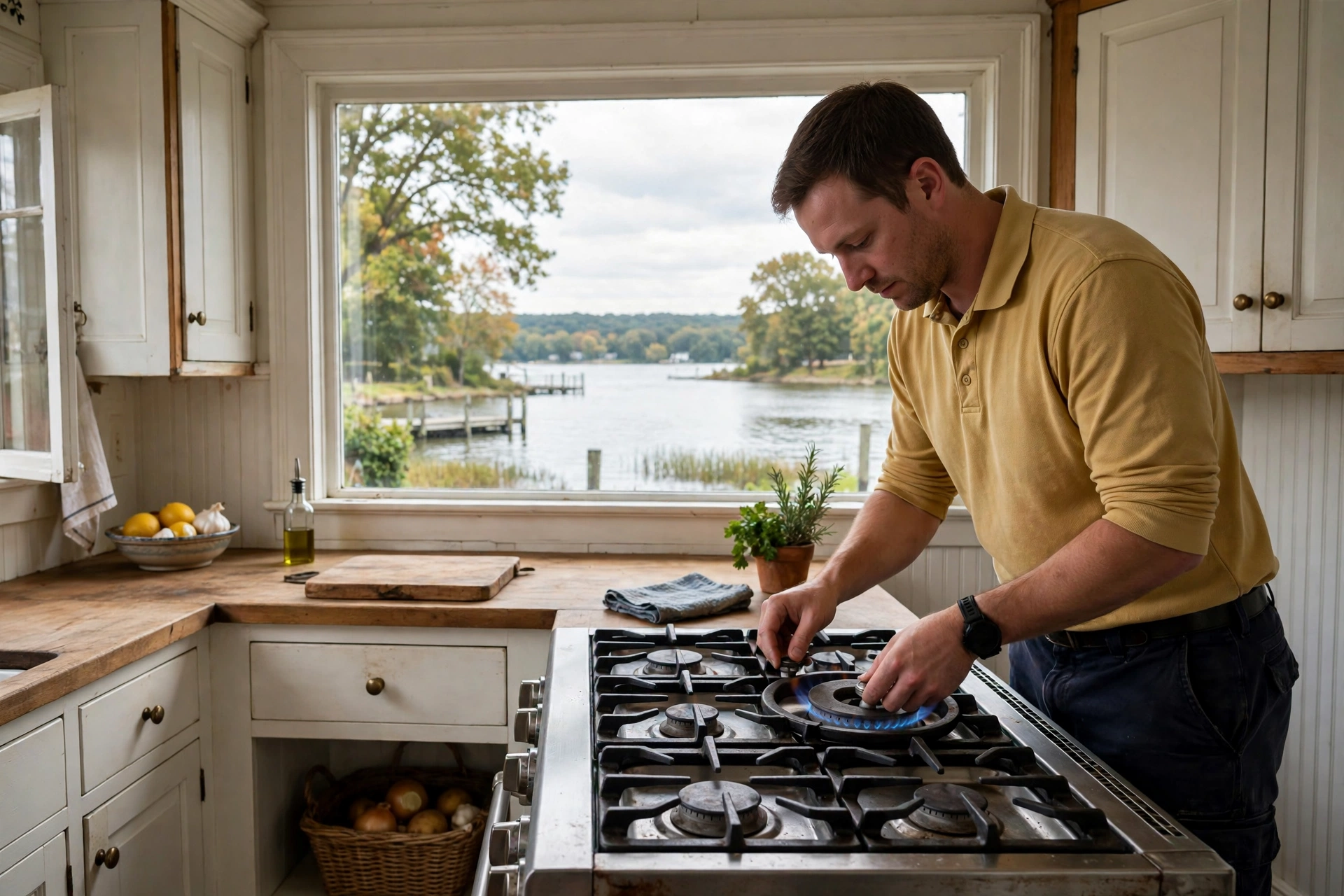
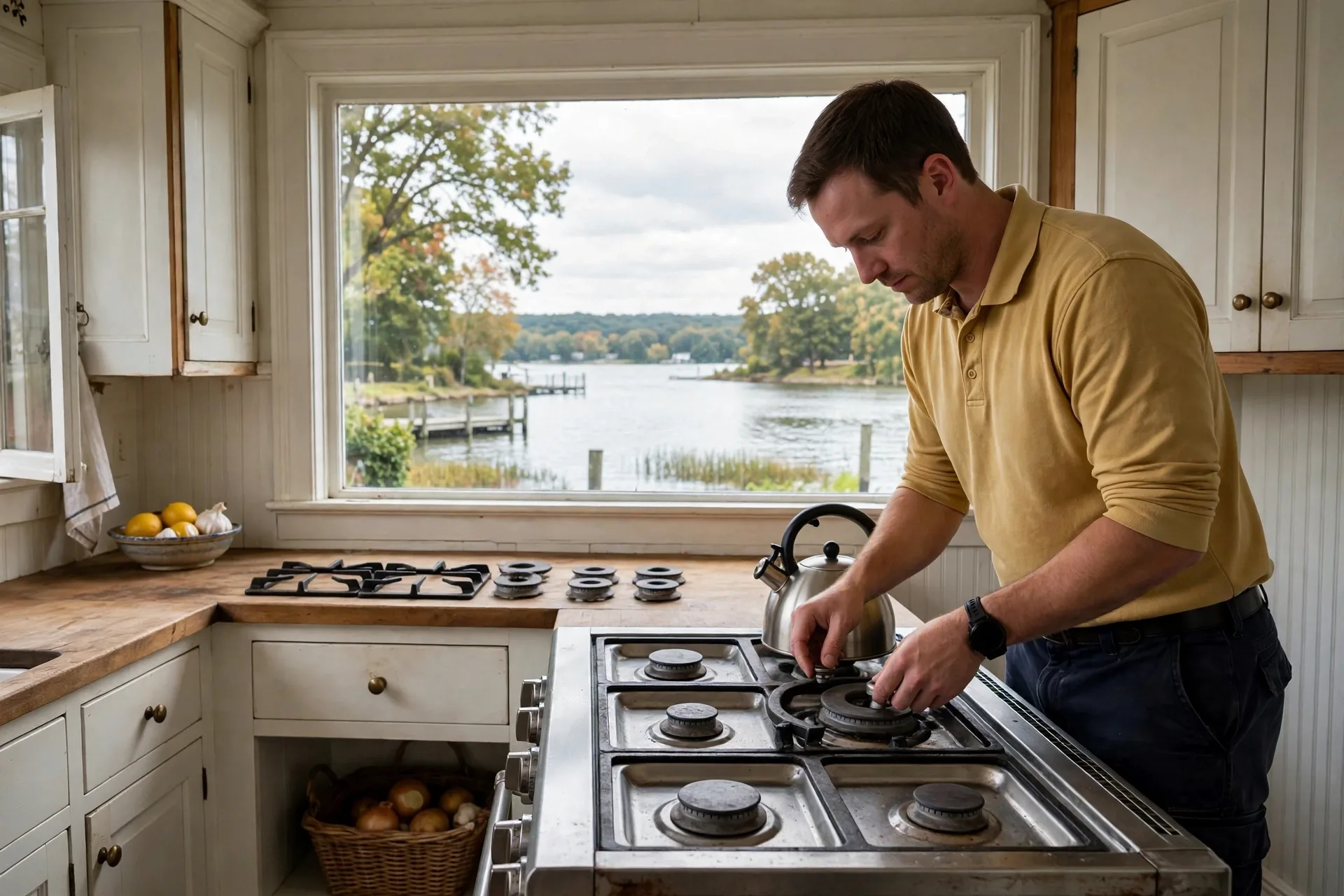
Fort Washington Appliance Repair Co handles Gas Appliance Repair in Fort Washington, Maryland. A diagnostic visit confirms what failed, one written figure prices the fix, and work starts on your word.
Gas Appliance Repair in Fort Washington, MD by Fort Washington Appliance Repair Co
Fort Washington Appliance Repair Co sends its own technicians for gas appliance repair in Fort Washington, and no repair is priced until the machine itself has shown us what failed.
Gas appliances concentrate the trade's responsibilities: ignition, combustion, and venting all have to be right at once. We repair gas ranges, dryers, and wall ovens, test every repair for leaks and proper flame, and hold a simple rule: a gas fault is finished only when it is safe, not merely when it works. Fort Washington households tend to discover gas appliance trouble in batches: after storms, during heat waves, and in the first cold week, when machines that were quietly aging all decide together.
Ignition systems and their logic
Gas dryers add cycling coils that fail warm: strong ignition at minute one, silence by minute twenty, a pattern we test by running the machine, not by replacing parts in sequence. Spark ignition on cooktops fails at electrodes, switches, and modules, and a burner that lights with a match but not its knob has told you exactly where to look. The hot surface igniter is both match and safety witness: it must draw enough current to prove heat before the valve opens, and its slow weakening is the most common gas oven fault in existence. Repairs are proven under load in Fort Washington before they are called finished.
Valves, flames, and venting
Carbon monoxide discipline closes every gas job: combustion verified, connections leak tested, and the work area checked before we leave. We read flames the way electricians read meters. Color, shape, and stability say whether combustion is right, and adjustments follow the reading. Gas valves are replaced, never persuaded: a valve that sticks, weeps, or responds late is retired on the spot. Well and septic details on the form change how some visits are planned here, and we ask early.
How We Diagnose Gas Appliance Repair in Fort Washington
We test current draw at the igniter, valve response, and flame behavior across cycles, because gas faults are time and temperature dependent and cold tests lie about them. Potomac humidity works on every door seal in Fort Washington all summer long.
Recent Project: Gas Appliance Repair in Oxon Hill
BEFOREAFTER
A call from Oxon Hill: Gas wall oven dead after a power outage. Testing found the control had locked out on a failed ignition sequence with a worn igniter. We replaced the igniter, cleared the lockout, and ran two full bake cycles with leak checks. Tantallon and the river streets keep machines for decades, and our records are kept to that horizon.
Turnaround
Finished in one visit.
Final Price
$345
Gas Appliance Repair Cost in Fort Washington, MD
What moves the figure is the appliance and the access: a dryer igniter is an hour, while a wall oven valve involves the unit's removal from its cabinet. One figure is quoted in writing after diagnosis, and the diagnostic fee folds into the repair when you proceed, which is the arrangement the published guides describe. Storm flickers off the river age control boards across neighborhoods in a single evening.
Why Fort Washington Calls Fort Washington Appliance Repair Co for Gas Appliance Repair
Gas work rewards method over speed: test the circuit, observe the cycle, verify the safety. We would rather watch a dryer for twenty minutes than return to a fault we pronounced fixed from a cold start. The details of this gas appliance visit, findings, parts fitted, and readings taken, are written into a visit record you keep. If the machine ever argues with our repair, that record is where the conversation starts. Accokeek and Oxon Hill work routes through the same written standard as Fort Washington itself.
Request an Appliance Repair Quote in Fort Washington, MD
Use the quote form to describe the symptom as you experience it. The plainer the description, the faster the diagnosis starts when we arrive.
Frequently Asked Questions
Why does my gas oven take forever to preheat, then lose heat?
That is the textbook weak igniter pattern, the single most common gas oven story. The test takes minutes and the part is modest. Garage and lower level units here live harder lives than kitchen machines, and are judged by that standard.
Is a gas smell always an emergency?
Strong odor: out of the house and call the utility. Brief ignition whiffs are common service items. We are direct about the difference and conservative on purpose. Large households here run laundry like a small business, and the diagnosis respects the volume.
Why does my gas dryer stop heating mid load?
Valve coils weaken as they heat up, closing the gas supply partway through the cycle. The fault only performs warm, which is why we run the machine through a real cycle during diagnosis. Repairs are proven under load in Fort Washington before they are called finished.
What does the diagnostic visit cost?
The visit runs $75 to $125 in the published guides, credited toward the repair in the usual arrangement, with safety verification built in. Well and septic details on the form change how some visits are planned here, and we ask early.
Can a gas valve be adjusted instead of replaced?
Regulators and air shutters are adjusted as part of proper service. The valve itself, if it sticks or weeps, is replaced; that line does not move. The visit record, readings and parts noted, stays with the household after we leave.
Do you leak test after repairs?
Always. Leak testing and flame verification are how a gas job ends, and we note them on the visit record. Potomac humidity works on every door seal in Fort Washington all summer long.
Get Your Appliance Repair Quote
Booking starts here. Tell us the appliance, the symptom, and where the machine lives, and the answer you get back carries the published range for the work and a plan for the diagnostic visit that prices it exactly.
Prefer to talk it through first? Send the form and we will call you back at the number you give us.